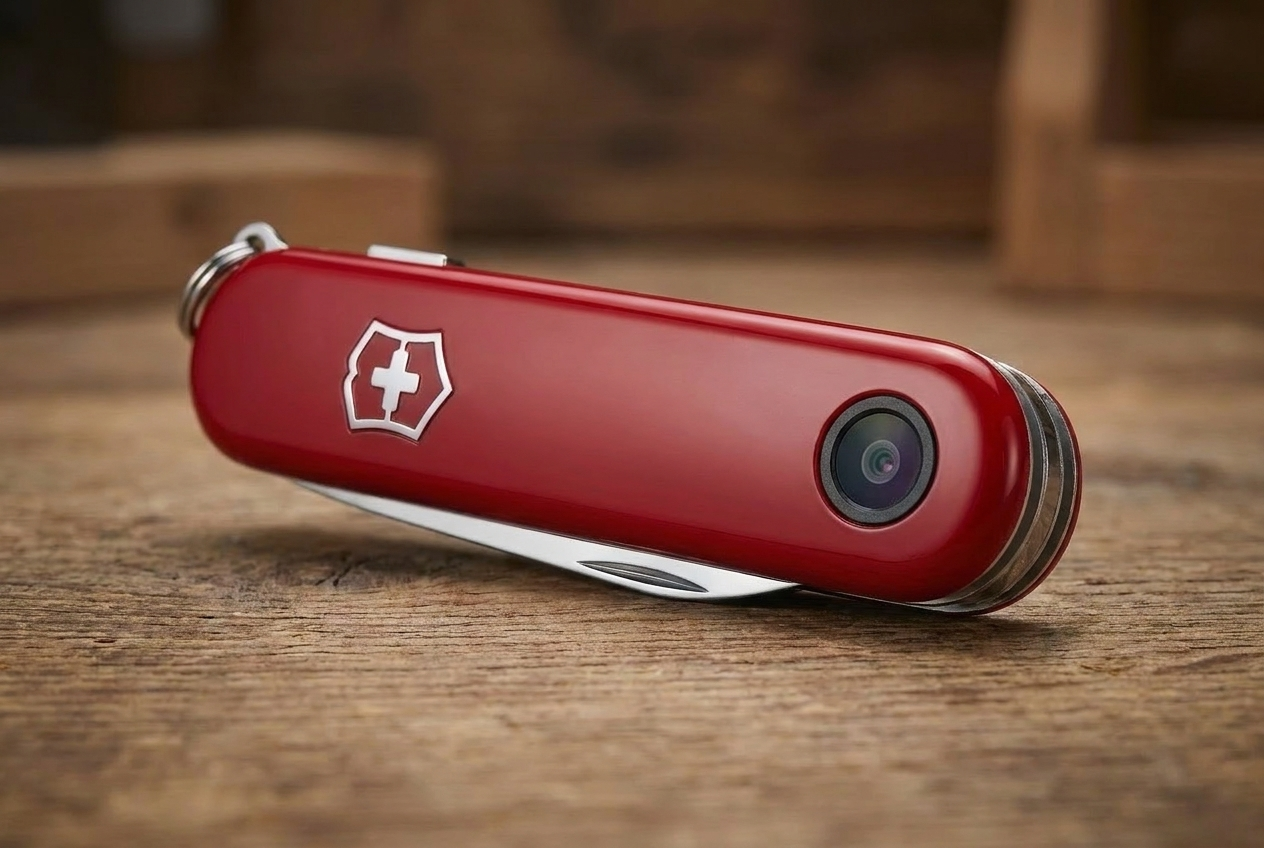
Victorinox Pocket Camera
Going from a loose idea to a visualized concept with Vizcom — no 3D model required.
I've long wanted to play around with Vizcom to visualize a concept. So in this post I'm testing going from loose thoughts to a visualized concept, without spending time on a 3D model.
One of the reasons I find it hard to leave my smartphone at home is the ability to always take a picture. It's not that I don't own a camera. But I don't have a camera that takes up as little space as my smartphone. So I'm a bit in love with the idea of the Kodak Chamera — a tiny camera you can always just keep in your pocket. Unfortunately, I'm not in love with the quality of the photos it takes.
Concept
A pocket camera that takes smartphone-quality photos
There's one thing I like to slip into my pocket whenever I head out: my Victorinox Swiss pocket knife. It doesn't get in the way. It's small and compact, with a rounded shape that makes it perfect to carry around.

What could that look like? This is where I could make a nice illustrator sketch. But let's keep it simple, as a collage instead.

With my cut-and-paste concept ready, I was set to jump into Vizcom. It was pretty great working on an infinite canvas with several nodes running at once, rather than doing this in ChatGPT.
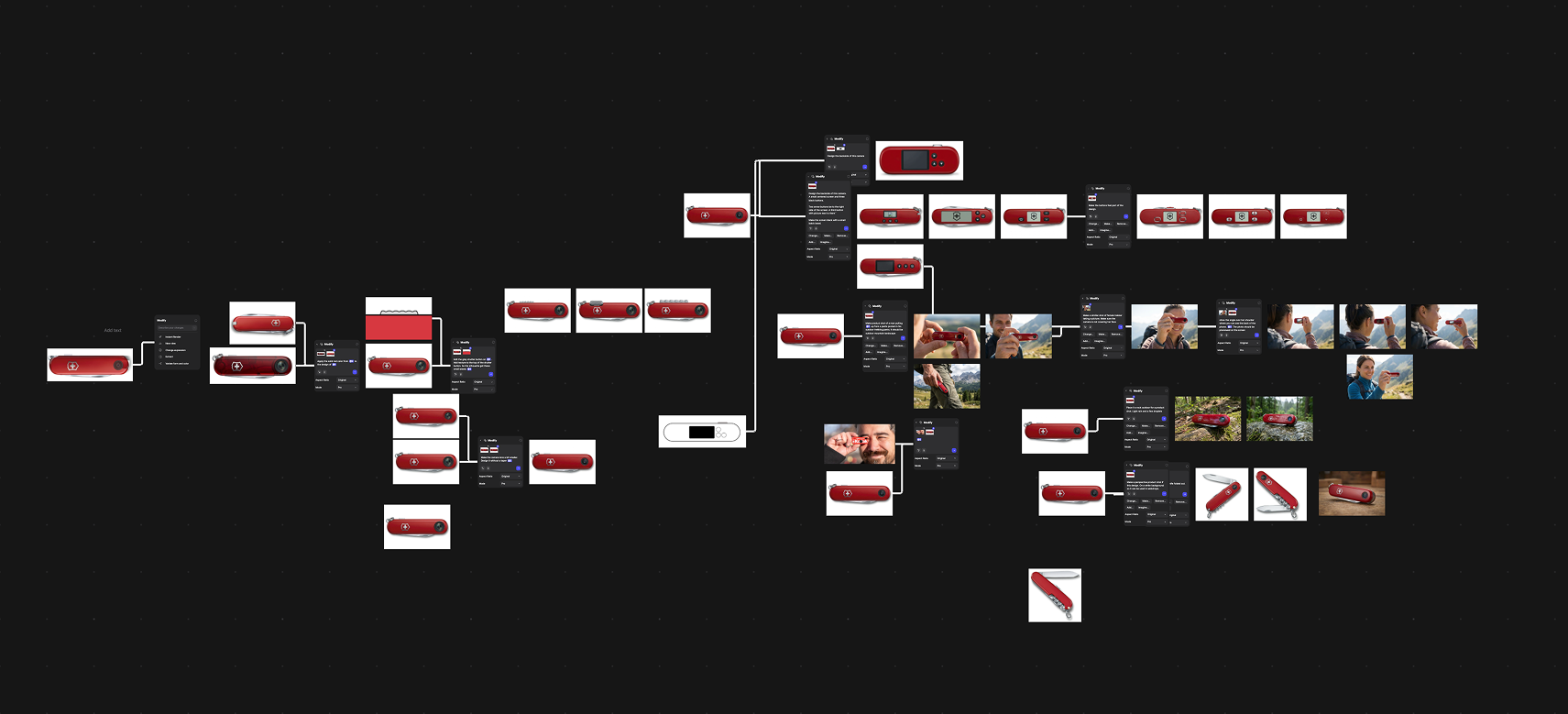
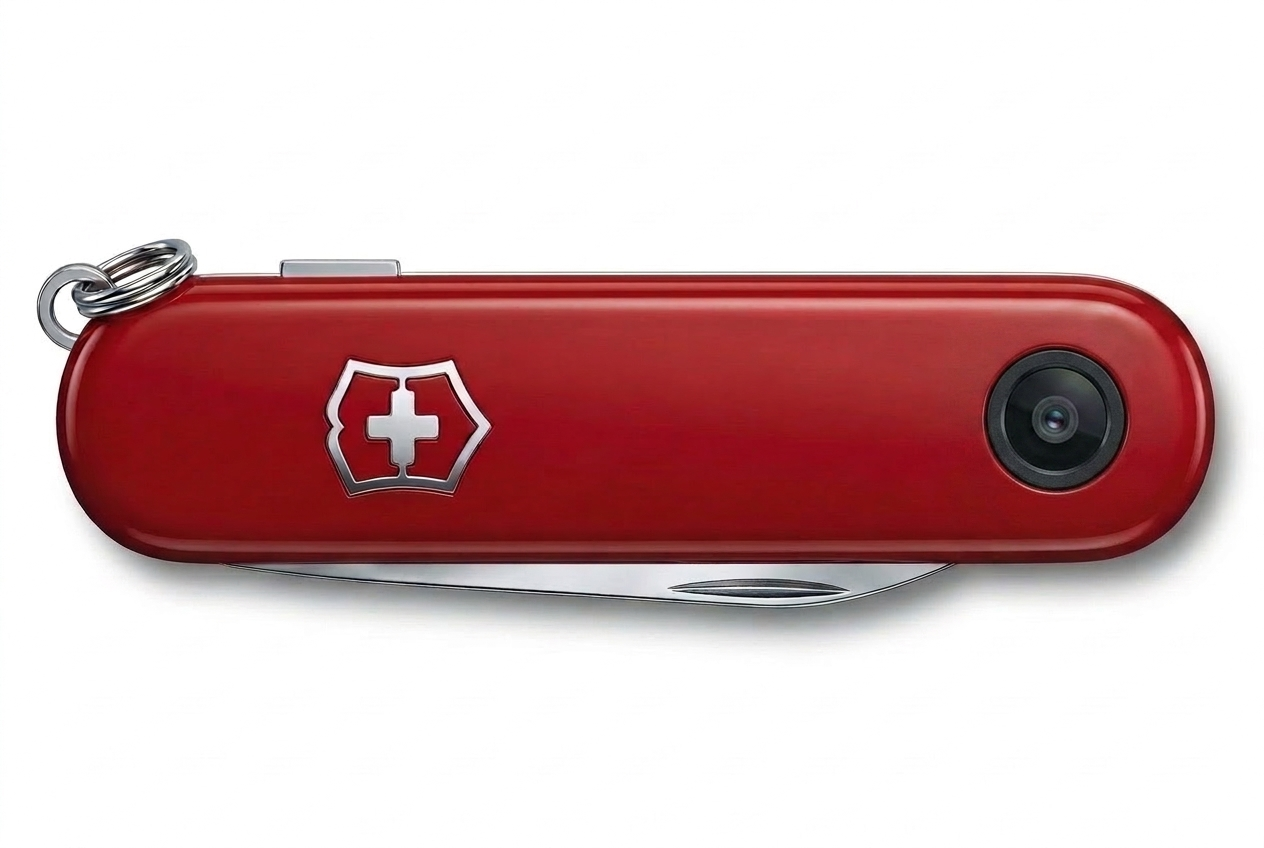
After a bit of time I had a rendering I was happy with. I probably could have made this in Illustrator or Rhino/Keyshot instead. That would have given me more control, but it would also have required investing considerably more time.
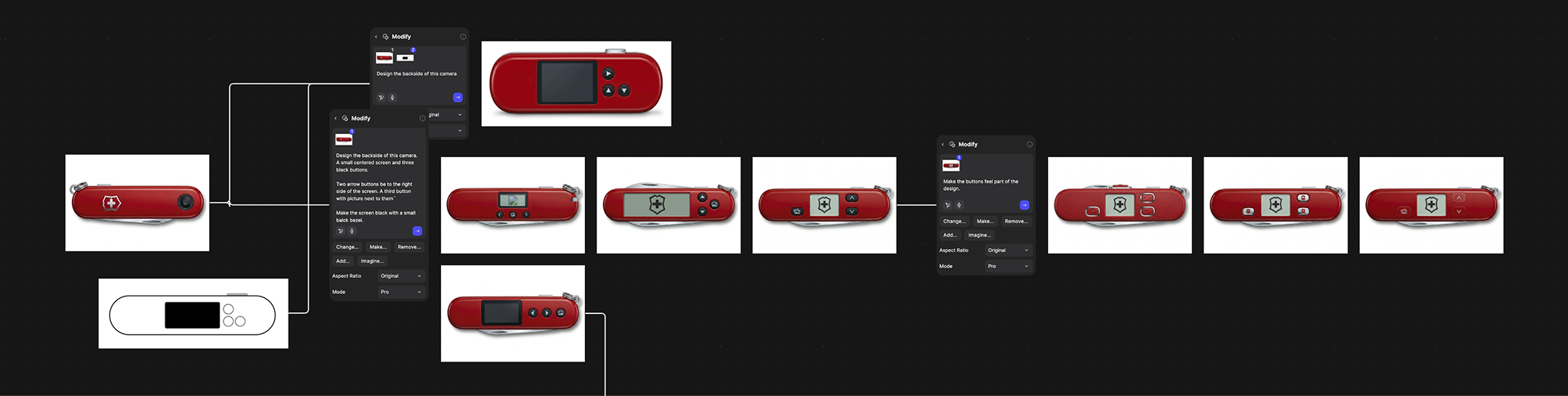
The back was harder for me to land, but then again I didn't give it a clear direction either.
The really great part of Vizcom was placing the product in context. That's not something I could have done myself, and it helps build the storytelling around a small outdoor camera you can bring along on a trip.
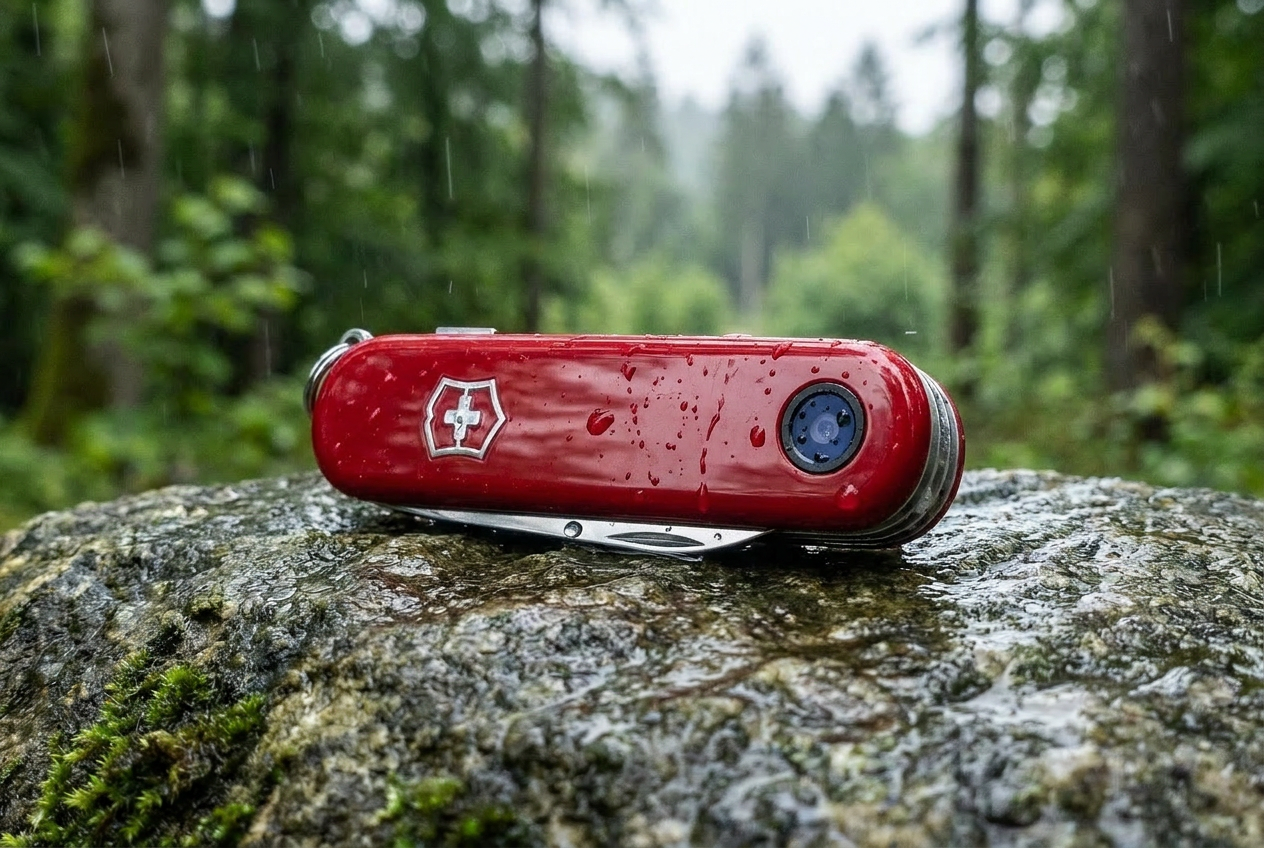
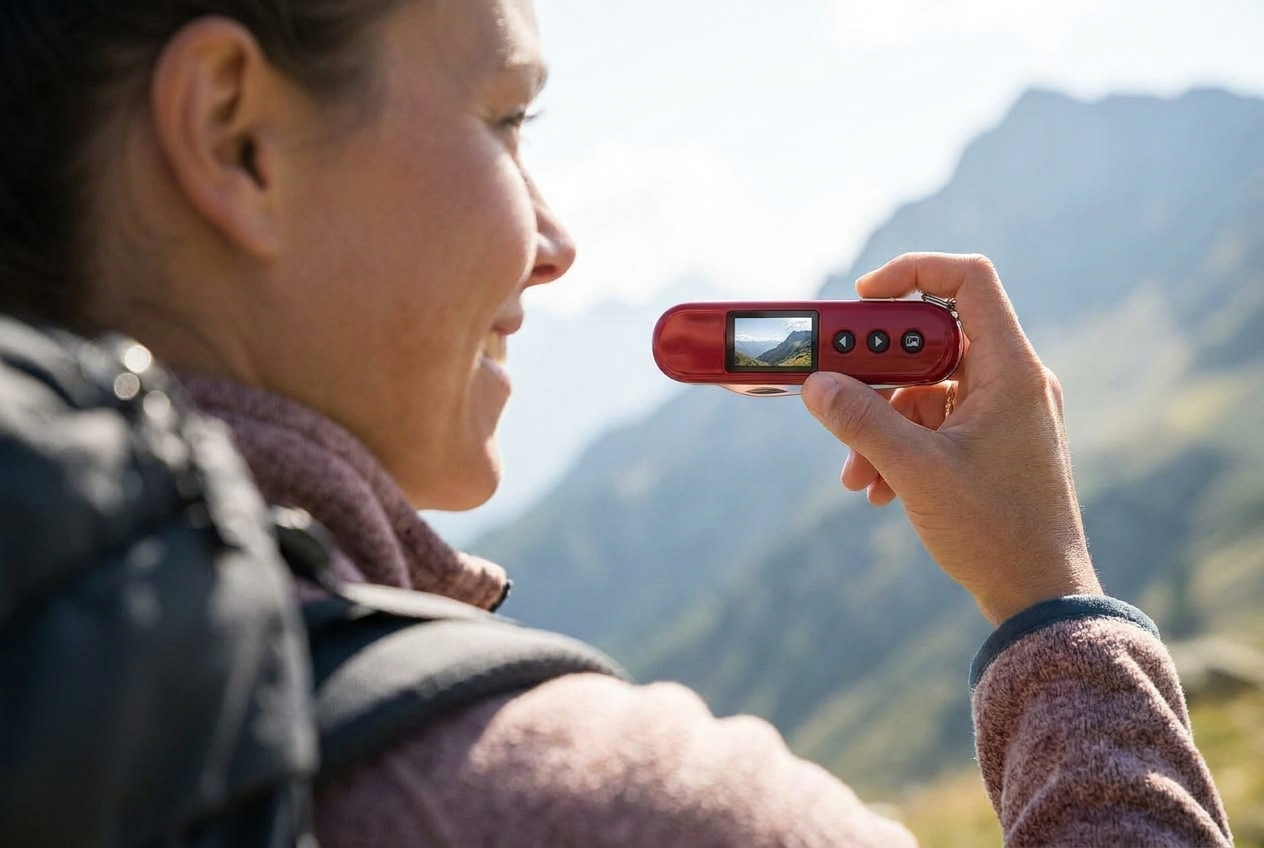
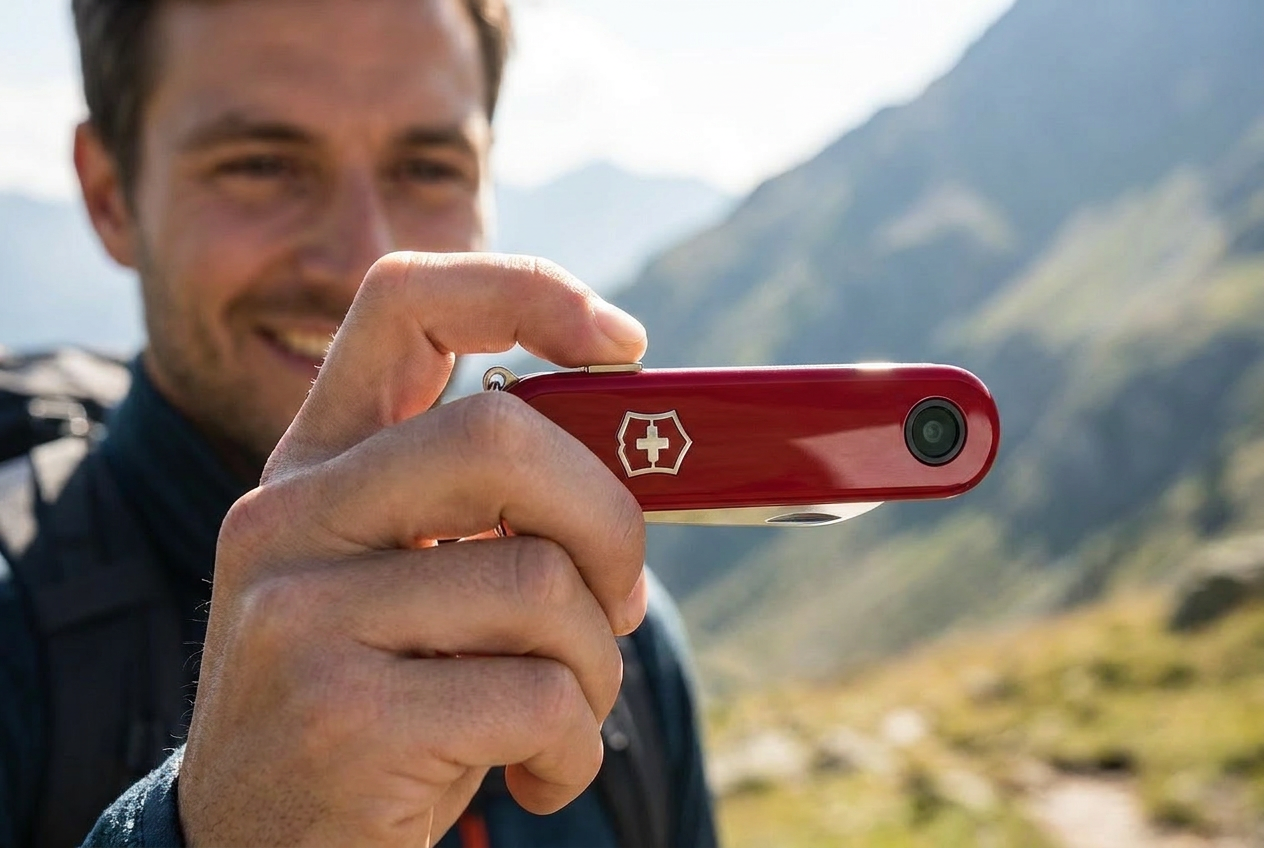
Swipe to see more →
Ran out of credits, but made a few abstract renderings over in ChatGPT instead. This is the kind of thing I used to make a lot back when I did my own rendering. But the product's story came across better through the images in context.
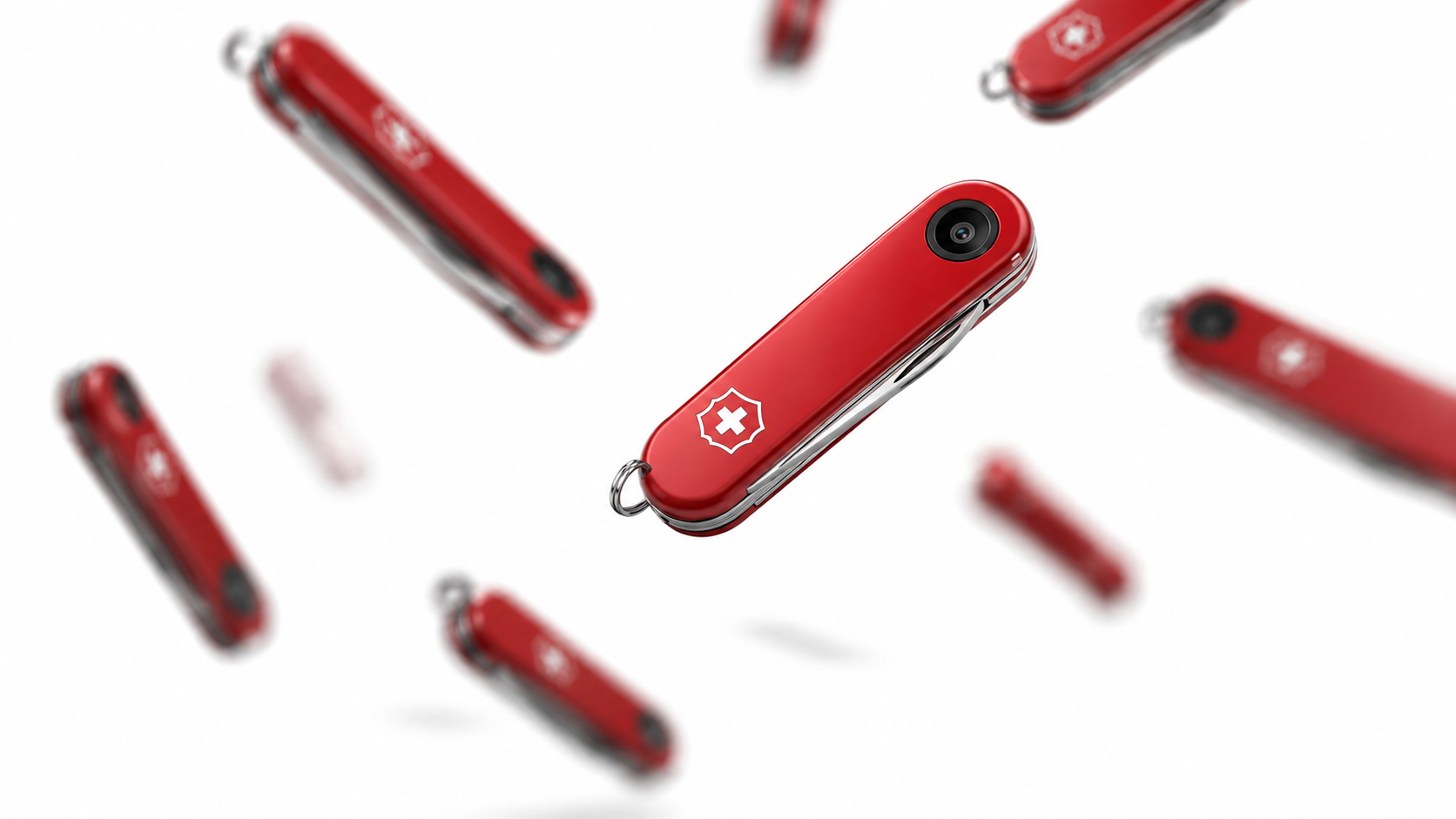
As a closing note: I didn't miss the rendering part of my design process. But it was frustrating at times to tweak details. Here I lost some of the control over detail that makes the design process fun. But for a quick gut-feeling idea, AI really is a fun and effective way to externalize ideas.
Now I'll tuck that idea into my pocket and jump on to the next concept.
